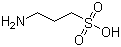
Homotaurine, also known as 3-amino-1-propanesulfonic acid, is a naturally occurring amino sulfonic acid that has occupied a distinctive place in neuropharmacology and Alzheimer's disease research. Although it has never become a widely marketed therapeutic agent, it has significantly influenced scientific efforts to develop disease-modifying treatments for neurodegenerative disorders. Its importance lies less in its chemical structure than in the scientific questions it helped address: whether small molecules could interfere with the aggregation of amyloid-β peptides and thereby alter the course of Alzheimer's disease.
Homotaurine was originally identified as a naturally occurring compound in certain species of marine red algae. Structurally, it closely resembles taurine, differing by the addition of one methylene group in the carbon chain. During the latter half of the twentieth century, chemists and neurobiologists became increasingly interested in amino sulfonic acids because of their structural similarity to naturally occurring neurotransmitters and neuromodulators. Such compounds provided valuable tools for exploring the relationship between molecular structure and nervous system function.
Interest in homotaurine expanded considerably as research into Alzheimer's disease intensified. One of the defining pathological features of the disease is the accumulation of amyloid-β peptides into oligomers and plaques within the brain. Laboratory studies suggested that homotaurine could bind to soluble amyloid-β species and reduce their aggregation, raising the possibility that it might slow the underlying disease process rather than simply alleviate symptoms. This mechanism distinguished homotaurine from existing treatments that primarily targeted neurotransmitter systems.
These findings led to the development of tramiprosate, the pharmaceutical form of homotaurine, as a candidate disease-modifying therapy. Clinical development advanced through extensive preclinical studies and multiple clinical trials, culminating in large Phase III studies involving patients with mild to moderate Alzheimer's disease. Although the primary clinical endpoints were not achieved, the program generated one of the largest datasets obtained for an anti-amyloid small molecule and provided valuable information about biomarker evaluation, trial design, and disease progression in Alzheimer's disease.
Subsequent analyses suggested that certain genetic subgroups, particularly individuals carrying specific APOE genotypes, might derive greater benefit than the overall study population. These observations stimulated renewed interest in precision medicine approaches to neurodegenerative disease. Rather than ending the scientific story of homotaurine, they encouraged the development of improved formulations and follow-on compounds designed to optimize pharmacological properties while retaining the original anti-amyloid concept.
One such successor is ALZ-801 (valiltramiprosate), a prodrug developed to improve oral exposure and pharmacokinetic characteristics. Ongoing clinical research continues to investigate whether carefully selected patient populations may benefit from this therapeutic strategy. Regardless of the eventual clinical outcome, the progression from homotaurine to tramiprosate and subsequently to ALZ-801 illustrates how pharmaceutical research often advances through successive refinement rather than a single decisive breakthrough.
Beyond Alzheimer's disease, homotaurine has contributed to broader understanding of amino sulfonic acid chemistry and the design of neuroactive molecules. Comparisons between taurine, homotaurine, and related compounds have helped researchers investigate structure-activity relationships governing blood-brain barrier penetration, receptor interactions, and neuroprotective mechanisms. These studies have enriched medicinal chemistry directed toward disorders of the central nervous system.
The scientific significance of 3-amino-1-propanesulfonic acid therefore extends beyond its role as a pharmaceutical candidate. It represents an important chapter in the history of Alzheimer's disease drug discovery and exemplifies the persistence of medicinal chemistry in addressing one of medicine's most challenging disorders. Although homotaurine itself has not become an established medicine, the concepts it inspired continue to influence the development of therapies aimed at modifying the underlying biology of neurodegenerative disease.
**References**
1. Gervais, F. et al. (2007). "Targeting soluble Aβ peptide with tramiprosate for the treatment of brain amyloidosis." *Neurobiology of Aging*, 28, 537-547.
2. Aisen, P. S. et al. (2011). "Tramiprosate in mild-to-moderate Alzheimer's disease: a randomized, double-blind, placebo-controlled, multicentre study." *Alzheimer's Research & Therapy*, 3, 26.
3. Cummings, J., Aisen, P., Apostolova, L. G. et al. (2021). "Aducanumab: Appropriate Use Recommendations." *The Journal of Prevention of Alzheimer's Disease*, 8, 398-410. (Provides context for the evolution of anti-amyloid therapeutic strategies.)
|





 GHS07 Warning Details
 chemBlink Chemical Story