
Online Database of Chemicals from Around the World
| Simagchem Corporation | China | |||
|---|---|---|---|---|
 | www.simagchem.com | |||
 | +86 13806087780 | |||
 | +86 (592) 268-0237 | |||
 | sale@simagchem.com | |||
| Chemical manufacturer since 2002 | ||||
| chemBlink Standard supplier since 2008 | ||||
| Hefei TNJ Chemical Industry Co., Ltd. | China | |||
|---|---|---|---|---|
| www.tnjchem.com | |||
| +86 (551) 6541-8684 | |||
| +86 (551) 6541-8697 | |||
| sales@tnjchem.com | |||
| Chemical manufacturer since 2001 | ||||
| chemBlink Standard supplier since 2010 | ||||
| BOC Sciences | USA | |||
|---|---|---|---|---|
| www.bocsci.com | |||
| +1 (631) 485-4226 | |||
| +1 (631) 614-7828 | |||
| info@bocsci.com | |||
| Chemical manufacturer | ||||
| chemBlink Standard supplier since 2010 | ||||
| Shanxi Wencheng Chemicals Co., Ltd. | China | |||
|---|---|---|---|---|
| www.wenchengchem.com | |||
| +86 (351) 799-1193 | |||
| wenchengchem01@163.com | |||
| Chemical distributor since 2001 | ||||
| chemBlink Standard supplier since 2014 | ||||
| Hangzhou Leap Chem Co., Ltd. | China | |||
|---|---|---|---|---|
| www.leapchem.com | |||
| +86 (571) 8771-1850 | |||
| market19@leapchem.com | |||
 | QQ Chat | |||
| Chemical manufacturer since 2006 | ||||
| chemBlink Standard supplier since 2015 | ||||
| Riverland Trading LLC. | USA | |||
|---|---|---|---|---|
| www.riverlandtrading.com | |||
| +1 (336).944-2293 | |||
| bens@riverlandtrading.com | |||
| Chemical distributor | ||||
| chemBlink Standard supplier since 2023 | ||||
| Mudanjiang Fengda Chemicals Import and Export Co., Ltd. | China | |||
|---|---|---|---|---|
| www.mudanjiangchem.com | |||
| +86 (453) 625-5887 | |||
| +86 (453) 629-6887 / 622-3551 | |||
| fengda@mudanjiangchem.com | |||
 | WeChat: fengdachem | |||
 | WhatsApp:+8615645398875 | |||
| Chemical distributor since 1995 | ||||
| chemBlink Standard supplier since 2026 | ||||
| Suzhou TSLA Industries Co., Ltd. | China | |||
|---|---|---|---|---|
| www.wil-chem.com | |||
| +86 (512) 6809-7003 | |||
| +86 (512) 6807-4983 | |||
| info@wil-chem.com | |||
| Chemical manufacturer | ||||
| Classification | Inorganic chemical industry >> Inorganic salt >> Metal nitrates and nitrites |
|---|---|
| Name | Calcium nitrite |
| Synonyms | calcium dinitrite |
| Molecular Structure | 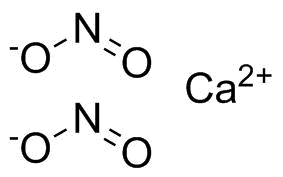 |
| Molecular Formula | Ca.(NO2)2 |
| Molecular Weight | 132.09 |
| CAS Registry Number | 13780-06-8 |
| EC Number | 237-424-2 |
| SMILES | N(=O)[O-].N(=O)[O-].[Ca+2] |
| Density | 1.674 g/mL (Expl.) |
|---|---|
| Solubility | water: 68% w/w (42 °C (Expl.) |
| Hazard Symbols |      GHS03;GHS05;GHS06;GHS07;GHS09 Danger Details GHS03;GHS05;GHS06;GHS07;GHS09 Danger Details | ||||||||||||||||||||||||||||||||||||||||||||||||||||||||||||||||
|---|---|---|---|---|---|---|---|---|---|---|---|---|---|---|---|---|---|---|---|---|---|---|---|---|---|---|---|---|---|---|---|---|---|---|---|---|---|---|---|---|---|---|---|---|---|---|---|---|---|---|---|---|---|---|---|---|---|---|---|---|---|---|---|---|---|
| Risk Statements | H272-H301-H302-H318-H319-H400-H410 Details | ||||||||||||||||||||||||||||||||||||||||||||||||||||||||||||||||
| Safety Statements | P210-P220-P264-P264+P265-P270-P273-P280-P301+P316-P301+P317-P305+P351+P338-P305+P354+P338-P317-P321-P330-P337+P317-P370+P378-P391-P405-P501 Details | ||||||||||||||||||||||||||||||||||||||||||||||||||||||||||||||||
| Hazard Classification | |||||||||||||||||||||||||||||||||||||||||||||||||||||||||||||||||
| |||||||||||||||||||||||||||||||||||||||||||||||||||||||||||||||||
| SDS | Available | ||||||||||||||||||||||||||||||||||||||||||||||||||||||||||||||||
 chemBlink Chemical Story
|
Calcium nitrite, CAS 13780-06-8, is an inorganic salt with the formula Ca(NO2)2 and a molecular weight of approximately 132.09. It is highly soluble in water and is used in several industrial applications, but one of its most important roles is unusually hidden from view: calcium nitrite can be added to reinforced concrete to help protect the steel buried inside it from corrosion. Steel and concrete might seem like an unlikely partnership. Steel is strong in tension, while concrete is strong in compression, so combining them produces a remarkably useful structural material. There is also a chemical advantage. Fresh concrete is highly alkaline, commonly having a pore-solution pH above 12. Under these conditions, reinforcing steel develops a thin passive oxide film that greatly slows further corrosion. As long as this passive state survives, steel can remain protected inside concrete for many years. The difficulty begins when aggressive substances reach the reinforcement. Chloride ions are especially important because they can penetrate concrete from marine environments, deicing salts, contaminated materials, or other sources. When enough chloride accumulates at the steel surface, it can destabilize the passive film and initiate localized corrosion. Iron begins to dissolve electrochemically, and corrosion products form. Rust inside reinforced concrete creates a mechanical problem as well as a chemical one. The corrosion products occupy more volume than the original metallic iron. Because the steel is confined within rigid concrete, this expansion generates internal stresses. Cracks can develop along the reinforcement, followed by delamination and spalling of the concrete cover. A process beginning on a microscopic steel surface can eventually become visible as large cracks and pieces of concrete breaking away. Calcium nitrite was developed as one way to interfere with this process. After dissolution in the concrete pore solution, it supplies nitrite ions, NO2−. Nitrite acts as an anodic corrosion inhibitor and promotes the formation or maintenance of a protective ferric oxide-rich passive layer on steel. In simplified descriptions, nitrite helps oxidize ferrous species produced during corrosion toward ferric species associated with a more protective oxide film. One simplified reaction often used to illustrate the chemistry is: 2 Fe2+ + 2 OH− + 2 NO2− → 2 NO + Fe2O3 + H2O The actual electrochemical processes at a reinforcing-steel surface are more complicated than a single equation, and the composition of passive films depends on the surrounding environment. Nevertheless, extensive experimental work has established the practical corrosion-inhibiting effect of nitrite in chloride-containing concrete. An important feature of this protection is that the amount of inhibitor matters relative to the amount of chloride. Calcium nitrite does not create an unlimited barrier that makes chloride irrelevant. As chloride concentration increases, more nitrite is generally required to maintain protection. Researchers therefore often discuss the molar ratio of nitrite to chloride rather than simply the absolute amount of calcium nitrite present. This competition between aggressive chloride and protective nitrite is central to understanding how the inhibitor performs. Why use the calcium salt? Calcium is already a major element in cement chemistry, while calcium nitrite is readily soluble and can be introduced conveniently into concrete mixtures as an admixture. Commercial corrosion-inhibiting admixtures based on calcium nitrite have been used for reinforced concrete exposed to chloride environments, including bridges, parking structures, marine construction, and structures exposed to deicing salts. Calcium nitrite can also affect the concrete itself. Nitrite-containing calcium salts can influence cement hydration and may accelerate setting or early strength development depending on formulation, dosage, cement composition, and temperature. This means that its use requires mixture design rather than simply adding as much inhibitor as possible. Corrosion protection, setting behavior, strength development, workability, and compatibility with other admixtures all have to be considered together. The history of corrosion protection in reinforced concrete reflects a broader change in engineering philosophy. Concrete was once often treated as though embedding steel inside it automatically provided permanent protection. Experience with bridges, coastal structures, parking decks, and road infrastructure showed otherwise. Water and dissolved salts can slowly migrate through pores and cracks, and corrosion may begin years after construction. Because repairing chloride-damaged reinforced concrete can be extremely expensive, extending the time before corrosion begins can have substantial economic value. Calcium nitrite is interesting because it works before there is anything visible to repair. It is mixed into the concrete while the structure is being built, yet its intended target is a steel surface that may not face a serious chloride challenge until years or decades later. The chemical is therefore part of a preventive strategy: change the microscopic electrochemical environment around the reinforcement today so that corrosion becomes more difficult in the future. The chemistry also illustrates why corrosion is not simply a question of whether iron encounters water and oxygen. Reinforcing steel exists in an electrochemical environment controlled by pH, chloride concentration, oxygen availability, electrical potentials, transport through concrete, and the chemistry of the passive film. Calcium nitrite changes one part of that environment enough to influence the balance between active corrosion and passivity. Most people looking at a concrete bridge will never see the calcium nitrite that may be present within it. That invisibility is exactly the point. The compound is not added to decorate the concrete or change its external appearance. Its job takes place at the buried interface between steel and alkaline pore solution, where nitrite ions help preserve a protective state on the reinforcement. A small inorganic ion can therefore influence the service life of an enormous structure. Calcium nitrite is a reminder that some of the most important chemistry in civil engineering happens where nobody can see it: on the surface of a steel bar, sealed inside concrete, years after the concrete was poured. References 1. Berke, N. S. (1989). "The effects of calcium nitrite and mix design on the corrosion resistance of steel in concrete." Corrosion, 45, 569-575. 2. Ann, K. Y.; Jung, H. S.; Kim, H. S.; Kim, S. S.; Moon, H. Y. (2006). "Effect of calcium nitrite-based corrosion inhibitor in preventing corrosion of embedded steel in concrete." Cement and Concrete Research, 36, 530-535. 3. Söylev, T. A.; Richardson, M. G. (2008). "Corrosion inhibitors for steel in concrete: State-of-the-art report." Construction and Building Materials, 22, 609-622. 4. Published technical literature on calcium nitrite corrosion-inhibiting admixtures for chloride-exposed reinforced concrete. |
| Market Analysis Reports |